

Hayfever starts in earnest in April. For most people that means antihistamines and closed windows. For flower lovers it raises a more specific question: can you still have flowers in the house?
The answer is yes — with some thought about which stems to avoid and which to choose instead.
Why some flowers are worse than others
The culprit is airborne pollen. Flowers that rely on wind for pollination release large quantities of fine pollen into the air — this is what triggers symptoms. Flowers that rely on insects for pollination have heavier, stickier pollen that doesn't become airborne in the same way. The distinction matters more than most people realise.
Stems to avoid
Lilies are the main one. Their large, exposed stamens release pollen freely and it gets everywhere — on surfaces, on clothing, on pets. If you have hayfever or are sending flowers to someone who does, avoid lilies entirely. Removing the stamens as soon as the flower opens helps but doesn't eliminate the risk.
Chamomile, sunflowers and chrysanthemums belong to the same plant family as many hayfever-triggering weeds and grasses, and can cause reactions in sensitised individuals. Gypsophila — baby's breath — is another one that affects some people despite its delicate appearance.
What to choose instead
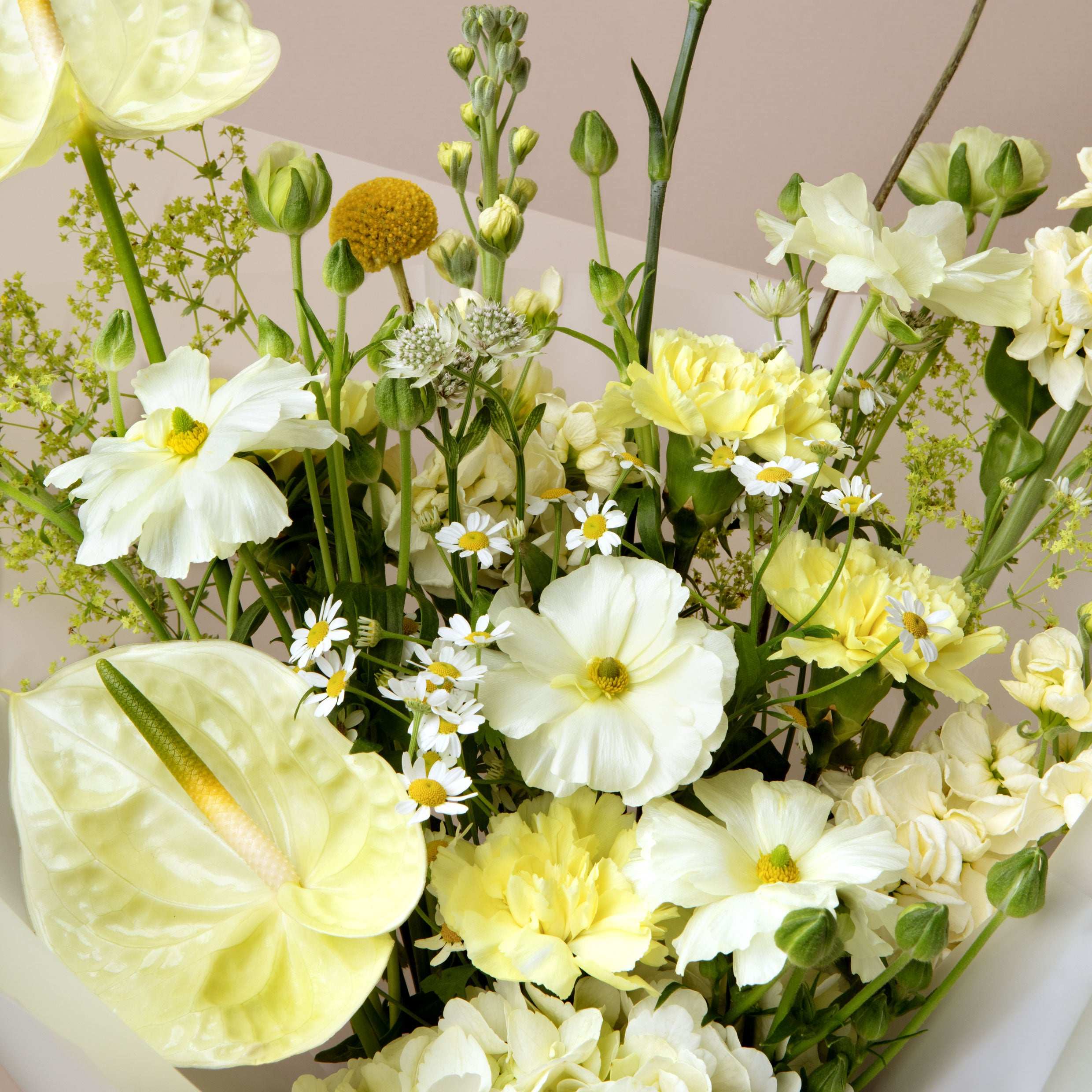
Roses are one of the safest cut flowers for hayfever sufferers. Their pollen is heavy and insect-distributed — it doesn't become airborne. The same is true of most of what Saints works with: ranunculus, tulips, peonies, lisianthus, anthurium, anemones and the majority of seasonal foliage. These are insect-pollinated stems with contained pollen that stay in the vase rather than in the air.
Orchids are among the least allergenic flowers available. Hydrangeas are generally safe. Carnations and alstroemeria are both low-risk.
Practical considerations
Fresh water every two days matters more for hayfever households than most — stagnant water encourages mould, which can trigger its own reactions. Keep arrangements away from air-conditioning, vents and fans which can disturb and circulate any pollen that is present. A considered hand-tied arrangement in a closed vase gives you more control over the environment than a loose, open arrangement.
Most Saints arrangements are built around insect-pollinated seasonal stems. If you're ordering for someone with hayfever, the safest collections to choose from are neutral, white and green — understated palettes that lean on foliage, anthurium and non-allergenic blooms. Laurent is our clean white option built around exactly this kind of structural, foliage-forward design, and Alba covers the green end of the same register.


